The Full Story
What's really happening with the King David Mowbray Golf Course
The short version is this: the City of Cape Town wants to permanently give away 42.8 hectares of public open land in the middle of a dense urban area to a private developer, and it's asking you to support that decision before it has done any of the studies that would tell you whether the idea is even viable.
That's not a characterisation. It's what their own documents say.
Here's the long version.
What the City is actually proposing
The King David Mowbray Golf Course has been a piece of public open land in Cape Town since the 1930s. It runs through the middle of one of the most densely developed parts of the city, bordered by the Elsieskraal River on one side and residential streets on the other. It functions as a green corridor, a flood plain, and the largest accessible open space in this part of the Southern Suburbs.
The City of Cape Town wants to dispose of it, permanently, to a private developer.
The City of Cape Town draft concept, May 2026 proposes the following on that land: approximately 4,600 open-market residential units, approximately 1,900 affordable residential units (a total of roughly 6,000 to 6,700 homes), 42,870 square metres of office space, 23,390 square metres of retail, 8,527 square metres of light industrial, a new road network, and a school. Building heights of 4 to 8 storeys across most of the site.
That is a proposed ~6,700 homes and ~75,000 m² of commercial space on land that currently has one building on it.
Once the transfer to a private developer happens, it cannot be reversed. There is no mechanism to get this land back.
The process they are using
To dispose of a public asset like this, the City must follow the Municipal Asset Transfer Regulations (MATR), a set of national rules governed by Government Notice R878 of 2008. These regulations exist precisely to protect the public when a municipality wants to give away land or assets that previously served a community function.
The regulations require a feasibility study, a valuation, consultation with treasury, and a public participation process. The comment window for this process is currently open. It closes on 7 August 2026.
Anyone who submits a comment before that date becomes a registered Interested and Affected Party (I&AP). That status gives you formal legal standing in every subsequent phase: the Environmental Impact Assessment, the Heritage Impact Assessment, the rezoning process. It is worth doing even if you just write one sentence.
The process sounds robust on paper. In practice, there are five serious problems with how the City is running it.
Problem 1: The transport plan rests on a train station that doesn't exist
The City's own Information Document is explicit: a proposed new railway station between Pinelands Station and Langa Station "is intended to form the backbone of the public transport for the development."
That sentence deserves a moment. The entire transport strategy for a proposed ~6,700 homes and ~75,000 m² of commercial space rests on a single piece of rail infrastructure that has not been built, not been approved, and not even been committed to by the organisation that would have to build it.
That organisation is Prasa, the Passenger Rail Agency of South Africa. Prasa publishes a Corporate Plan every year. These are public documents. There are now three of them covering the period from 2024 through 2029: the 2024/27 plan, the 2025/26 plan, and the most recent, the 2026/27-2028/29 plan, whose final version is dated 30 March 2026 (as tabled to Parliament).
No new station between Pinelands and Langa appears in any of them. The existing Central Line corridor through Pinelands and Langa is named in the 2024/27 plan, but only as existing infrastructure. There is no proposed new station, no capital allocation, no feasibility study, no timeline, no scoping. Nothing.
What does appear in Prasa's most recent plan, in the Central Line discussion on page 31, is this: the priority for the Central Line in the Western Cape is removing encroachments from the existing rail reserve. Informal settlements have grown into the rail reserve, and Prasa is focused on clearing those before they can reliably operate the trains that already exist. That is where their money and attention is going. Not new stations.
The most recent Prasa Corporate Plan was finalised on 30 March 2026. The City published its Information Document claiming this unbuilt station as the transport "backbone" two months later, in May 2026. They published that claim knowing Prasa's current three-year plan for the Western Cape had just been released and contained no mention of this station.
This is no longer only an absence in the published plans. In response to formal access-to-information requests, the City has now sworn, under affidavit, that it holds no feasibility study, business case, conceptual design or cost estimate for the station; that no formal commitment, memorandum of understanding, heads of agreement or letter of intent with Prasa or the provincial transport department exists; and that the station appears in no City integrated development plan, integrated transport plan or budget since 2020. Prasa, for its part, has confirmed in writing that no commitment of any kind was concluded. The "backbone" of the entire transport case is, on the City's sworn evidence and Prasa's own written confirmation, not planned, not funded and not agreed.
And this matters enormously because of a second fact the City has confirmed publicly. At the February 2025 public meeting on this project, the City acknowledged on the record that Forest Drive, the main road serving this area, cannot be widened. There is no road capacity solution if the train station doesn't materialise.
A trip is one one-way vehicle movement, and each home makes several every day. On top of the homes, the ~75,000 m² of office, retail and light industry generates a large share of trips of its own, independent of the residents. Using the standard South African method, the TMH 17 Trip Data Manual, we estimate the development would add between 25,000 and 36,000 additional vehicle trips per day. These are our own estimates, not the City's, and the City's full Traffic Impact Assessment has not been released. The range depends entirely on the train. Best case, the station is built and a highly optimistic 30% of residents switch to rail: even then the development adds about 25,000 vehicle trips a day to a road the City says cannot be widened. Worst case, the station is never built or residents keep driving, and close to 36,000 trips a day land on the network.
The worst case is the realistic one. The proposed station sits on the Central Line, which was suspended in October 2019 and saw only partial service resume in March 2023, and which has been repeatedly vandalised and encroached on, with 36 trains damaged by stone-throwing as recently as October 2024. Western Cape rail ridership stood at roughly 22.7 million passenger journeys in the 2024/25 financial year (Prasa's own 2024/25 Annual Report), a fraction of its former level. Rail is the least-used mode in the country: in the Western Cape only about 1.6% of household members travel by train (Statistics South Africa, National Household Travel Survey 2020). Car dependence rises with income, and a development that is majority open-market housing draws exactly the residents least likely to use a train, which makes a 30% mode-shift assumption generous even if the station is built.
The concept also proposes new vehicular connections onto Jan Smuts Drive and the N2. The N2 is a national road under SANRAL's jurisdiction, not the City's. There is no public SANRAL project or approval for new development access at this location. SANRAL is currently widening the N2 in Cape Town, the Swartklip to Baden Powell section from four to six or eight lanes at an estimated cost of around R2 billion, a project that protects the N2 corridor for future capacity. The SANRAL N2 upgrade was reported by Engineering News on 12 September 2024. The ITS Engineers Traffic Impact Assessment, which would show whether any grade-separated access structure is required at the N2, has not been released.
Problem 2: The sewage treatment plant serving this area is already failing
All of the development's wastewater would flow to the Athlone Wastewater Treatment Works. In 2022, the Department of Water and Sanitation conducted a Green Drop audit of that facility. The results: 15% microbiological compliance, 54% chemical compliance. The certification threshold is 90% for both. The plant is currently discharging non-compliant effluent into the Vygekraal and Black River system.
The City's multi-year upgrade of the plant, which would add enough treatment capacity to meaningfully absorb a large new development, is not scheduled for completion until 2029. The development would add an estimated 3.4 to 4.5 megalitres per day of additional sewage to a facility that is already out of compliance.
The City's own Information Document, in its civil services assessment, says that infrastructure upgrade requirements "will be determined following the capacity letter from the City of Cape Town." That capacity letter has not been obtained. The document used to ask the public to support this disposal openly acknowledges that the City has not yet confirmed the sewers can handle it.
This is not a future risk. As reported in People's Post in July 2024, the City has acknowledged that the Langa pump stations already cause sewage spills at the Days Walk intersection and the Uitvlugt/Union Avenue intersection under current load conditions, without any new development.
Problem 3: The land was valued before anyone knew what it was worth
The Municipal Asset Transfer Regulations require the Council to be informed of the fair market value of the asset before it can approve disposal. The City has produced two desktop valuations: approximately R171 million (31 March 2024) and approximately R395 million (31 March 2026).
On enquiry, the City stated that the increase reflects the inclusion of an additional portion of land in the disposal. The two figures are therefore not a like-for-like comparison. The R395 million figure appears in no public document; it was disclosed only after a member of the public asked the City directly, and the reason for the change only after a follow-up question.
But the additional disclosure does not fix the underlying problem. The value of development land is almost entirely a function of what it will be permitted to become. As of both valuation dates, not one of the following had been finalised: the Environmental Impact Assessment, the heritage impact assessment, the National Water Act authorisation, or the rezoning. The legal permissions that determine the land's value did not exist on either date.
The Constitutional Court, in Maccsand v City of Cape Town [2012] ZACC 7, established that independent statutory authorisations cannot be pre-empted or substituted. A valuation that assumes a particular development outcome before the regulatory environment has determined whether that outcome is lawful cannot satisfy the standard required by Regulation 11 of the MATR. Neither report, nor the methodology, comparables, or the per-portion breakdown, has been released. A detailed plain-English analysis is here.
Problem 4: Every regulatory approval this development needs comes after the disposal decision
The City's own Information Document, at page 32, lists the following as future processes: the Environmental Impact Assessment, the Heritage Impact Assessment, the National Water Act authorisation, and the rezoning and subdivision application.
These are not administrative formalities. They are the regulatory mechanisms that exist to determine whether a development of this scale is safe, viable, lawful, and in the public interest. Each of them involves independent government bodies making independent decisions. Each of them has its own public participation rights. None of them has started.
The public is being asked to support the permanent, irreversible disposal of 42.8 hectares of public land before a single one of these assessments has been completed.
The City's answer to this is that the MATR process is only about the "principle of disposal," not the specific development, so specialist studies are not yet needed. But this argument fails the moment you look at what the City has actually presented. The Information Document doesn't offer a vague principle. It offers a specific concept: a specific number of homes, a specific commercial footprint, a specific transport strategy, a specific phasing plan. You cannot simultaneously argue that this is a high-level principle not requiring supporting evidence, and use that specific concept as the basis on which the public is invited to form a view.
Problem 5: The authorisation for this entire process may have been defective, and the fix was adopted mid-process
This is the most recent development, and in some ways the most troubling.
The original Council resolution that authorised this public participation process was Resolution C28/10/24, adopted in October 2024. During the previous round of public engagement, which closed in March 2025, multiple commenters identified a specific legal problem: C28/10/24 only authorised the process for Portions A and C of the development site. Portion B, the golf course itself, the green space at the centre of this entire process, was not included.
If that is correct, the public participation process for the golf course land has never had valid legal authorisation. The process was defective from the beginning.
This challenge was raised in writing in 2025. The City provided no substantive response. The problem sat unaddressed for over a year.
Then, on 27 May 2026, while the current round of engagement was already underway, the City adopted a new Council resolution, C39/05/26. This resolution amended C28/10/24 to include all three portions: A, B and C.
The City's position is that the process is "procedurally sound." What has not been explained is how an amendment adopted while a process is already running, in apparent response to a legal challenge raised the previous year, cures an authorisation defect that predates it.
Under the Promotion of Administrative Justice Act, an administrative action must be procedurally fair, rationally connected to the information before the decision-maker, and authorised by law. A retroactive fix to a defective authorisation, adopted while the defective process is already underway, raises serious questions about whether those requirements are met.
The Council minutes and report underlying C39/05/26 have not been made public. Those minutes would show what was said when the resolution was adopted: whether it was explicitly framed as a cure to the Portion B gap, whether a legal opinion was tabled, whether the defect was acknowledged.
Problem 6: The site has critical ecological functions, and the City hasn't applied for the authorisations needed to alter them
The King David Mowbray Golf Course is not passive green space. It is an active part of Cape Town's urban ecology and water management system.
The Elsieskraal River runs through the site. Its associated floodplain wetland provides flood attenuation and stormwater management for the surrounding catchment. The City's own Information Document acknowledges that "existing sewer pipes lack capacity" and lists among the site's features "a highly degraded artificial wetland, the modified Elsieskraal River and associated floodplain wetland." Replacing much of the 42.8 hectares earmarked for disposal with buildings, roads and paving increases peak stormwater flow into a catchment that already causes sewer overflows at Days Walk and the Uitvlugt/Union Avenue intersection under current load conditions.
Any development that alters a watercourse or its associated floodplain requires authorisation under section 21(c) and 21(i) of the National Water Act 36 of 1998. That authorisation has not been applied for. It is listed in the City's own document as future work, to be done after the disposal is approved.
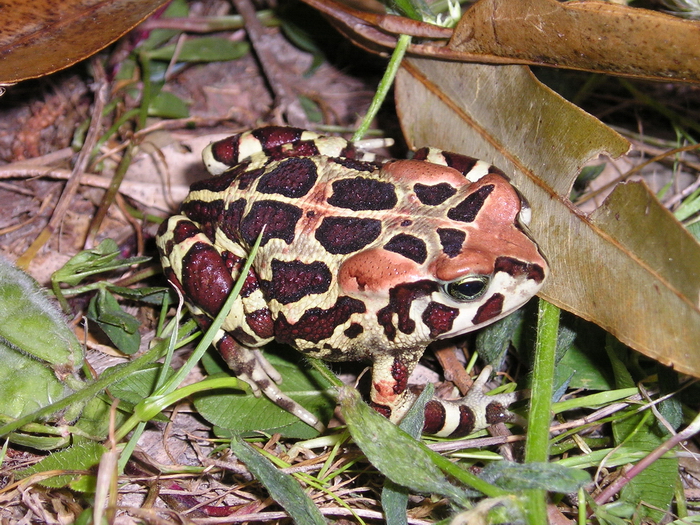
The City's appointed consultants, Infinity Environmental, flagged in their ecological surveys that the site has potential habitat for the Western Leopard Toad. The Western Leopard Toad is listed as Endangered on the IUCN Red List and is protected under the National Environmental Management: Biodiversity Act Threatened or Protected Species Regulations. Removing or degrading suitable habitat, or substantially increasing vehicle traffic through the toad's breeding migration corridors during the July–August breeding season, may trigger mandatory permits under those regulations. The City has not addressed this in its participation documents.
The site's mature tree canopy, some trees 60 to 70 years old, provides urban heat mitigation, stored carbon, and nesting habitat across the Southern Suburbs green corridor. A tree survey is underway but has not been published. Trees listed under SANBI's threatened species register or protected under the National Forests Act cannot be removed without separate authorisation.
Replacing much of 42.8 hectares of grass, open water and tree canopy with building mass and sealed surfaces will worsen the urban heat island effect in a part of the city already identified as heat-stressed. No urban heat impact assessment has been conducted. None of these authorisations exist. All of them come after the disposal. The public is being asked to support a permanent decision before any of them have been obtained. A separate article sets out how the City's own climate plan, flood policy and Elsieskraal restoration programme all argue against this disposal.
This is not vacant land: it is a working sports and community hub
The 42.8 hectares in question are not idle green space waiting for a use. They are in active daily public use for organised sport. The course is the national home and head office of the South African Disabled Golf Association, whose operations manager has said that hundreds of disabled players and school-level beginners take part in its programmes every week, and that without the partnership with King David Mowbray the association would not have the resources to continue. The course itself is a rare integration story in Cape Town sport: it unites the members of three historically separate clubs, King David, Peninsula and Mowbray. The same precinct is home to Clyde Pinelands, a football club founded in 1898 and among the oldest in the country, which runs grassroots youth football on the site.
A disposal that displaces these institutions removes existing, active public recreation, not surplus land. The City's participation documents propose new recreational facilities in the development, but they do not set out how, where, or at what capacity the organised sport and community programmes currently hosted here would be re-provided, nor whether the disabled-golf programme, which depends on this specific partnership, could survive relocation at all. Replacing established sporting institutions with a promise of future facilities is not a like-for-like exchange, and the plans do not yet show that it would be one.
A question of precedent and scale
A development of roughly 6,700 units, with river works, major bulk infrastructure, and a proposed new transport interchange, is a project of unusual scale for Cape Town. There is no directly comparable local precedent to plan against.
That matters because scale and novelty are the strongest predictors of delivery risk. Research by Professor Bent Flyvbjerg (University of Oxford) across thousands of large infrastructure and development projects finds that 70 to 90 per cent of complex projects run over budget and under-deliver on scope, and that the risk is greatest precisely where there is no comparable precedent. His paper, "The Iron Law of Megaproject Management", sets out the evidence base. The concern is not that this development will fail, but that the City's Information Document contains no risk analysis of what happens to the surrounding infrastructure, the affordable housing commitments, and the public land if delivery stalls, phases are dropped, or the development is restructured mid-process. A disposal is permanent. The conditions attached to it may not be.
The Constitutional Court has just ruled on how public land may be disposed of
On 2 July 2026 the Constitutional Court handed down judgment in Adonisi and Others v Minister for Transport and Public Works, Western Cape and Others [2026] ZACC 29, the case concerning the Tafelberg property in Sea Point. Among its findings, the Court declared unconstitutional a set of provincial regulations that allowed public participation in a land-disposal process to take place only after the disposal had effectively been concluded, and it held that the public had not been meaningfully engaged. Meaningful participation, the Court made clear, has to happen while the decision can still be shaped, not after it has been taken.
The relevance to this process is direct. Here the environmental authorisation, the heritage determination, the traffic study and the rezoning, and the studies that would allow the public to test any of them, are all scheduled to happen after the disposal decision the public is being asked to support now. The Constitutional Court has just confirmed that the timing of public participation in the disposal of public land is a constitutional question, not a procedural detail. No court has ruled on this specific process, but the principle the judgment sets down applies squarely to how this one has been sequenced.
You are not alone in objecting
The opposition to this disposal is broad and it is organised. A petition to save the course drew more than 2,000 signatures in its first three days. Those raising formal objections include the golf club and the three clubs it brings together, the South African Disabled Golf Association, the Clyde Pinelands football community, and Pinelands ratepayers and residents, with a residents' legal team engaged. Concerns aired at the public meetings have ranged from the pressure a development of this size would place on already-overburdened local schools, to traffic, to the loss of established public sport. This is not a fringe objection. It is a wide cross-section of the people who use and live around this land.
What you can do
The comment period closes 7 August 2026. Submitting a comment is the single most important action available to you right now. You don't need to write a legal argument. You need to send an email to Development.Mowbray@capetown.gov.za and mowbray@infinity.capetown stating your name, your suburb, that you object, and that you want to be registered as an Interested and Affected Party. One sentence is enough. The legal standing it creates is real and it persists through every subsequent phase of this process.
The objection is not "don't build housing." Cape Town needs housing. The objection is: do this properly. With a transport plan that has a confirmed counterparty. With a sewage system that works. With an EIA that has been completed. With a valuation conducted after the regulatory environment has been determined. With a Council resolution that validly authorises the process it is supposed to govern.
None of those things currently exist. And the City is asking for a permanent decision anyway.
Submit your objection, takes 2 minutes
All facts on this page are sourced from publicly available government documents. Sources are cited inline. This site does not represent any political party or organisation.
Sources
- City of Cape Town / Infinity Environmental, Draft Development Concept Information Document, King David Mowbray Golf Course and surrounds, May 2026, primary source for the proposed development programme figures
- Prasa Corporate Plan 2024/2027
- Prasa Corporate Plan 2025/26
- Prasa Corporate Plan 2026/27-2028/29 (final version, 30 March 2026)
- City of Cape Town, Deputy Information Officer affidavit, 15 June 2026 (station engagements "early and exploratory"; no formal commitments concluded; station not incorporated into City plans and budgets)
- Prasa written reply, 25 June 2026, Ref 11/7/4/9 (no firm decision on the station; feasibility study is "the next step"; personal details redacted)
- Prasa 2024/25 Annual Report (Western Cape ridership ~22.7 million)
- GroundUp, Metrorail Central Line coverage (suspension, encroachment, stone-throwing)
- Financial Mail, "All aboard Cape Town's rail plan?", 22 January 2026
- Statistics South Africa, National Household Travel Survey 2020 (Western Cape train mode share 1.6%)
- DWS Green Drop Report 2022 (Western Cape)
- City of Cape Town, public meeting notes, 26 February 2025
- MATR GN R878 of 2008
- Maccsand (Pty) Ltd v City of Cape Town [2012] ZACC 7
- Adonisi and Others v Minister for Transport and Public Works, Western Cape and Others [2026] ZACC 29 (Constitutional Court, 2 July 2026; participation in a land disposal may not be confined to after the disposal is concluded)
- News24, "Disabled golfers join fight against City's King David Mowbray Golf Club redevelopment", 7 July 2026 (SA Disabled Golf Association national home and programme)
- Cape Town ETC, "Massive backing to save King David Mowbray Golf Course" (petition exceeding 2,000 signatures in three days; the three-club history; Clyde Pinelands football)
- Promotion of Administrative Justice Act 3 of 2000
- Council Resolutions C28/10/24 and C39/05/26
- COTO TMH 17 Trip Data Manual (2012)
- City of Cape Town Property Development Department, letter of 12 June 2026 refusing extension of comment period (second desktop valuation: approximately R395m excl VAT, 31 March 2026; City's statement that the second figure reflects inclusion of an additional portion of land)
- Engineering News, "SANRAL to upgrade N2 in Cape Town", 12 September 2024 (Swartklip to Baden Powell widening, estimated ~R2 billion)
- Bent Flyvbjerg, "The Iron Law of Megaproject Management", University of Oxford (70-90% of large complex projects run over budget and under-deliver)